
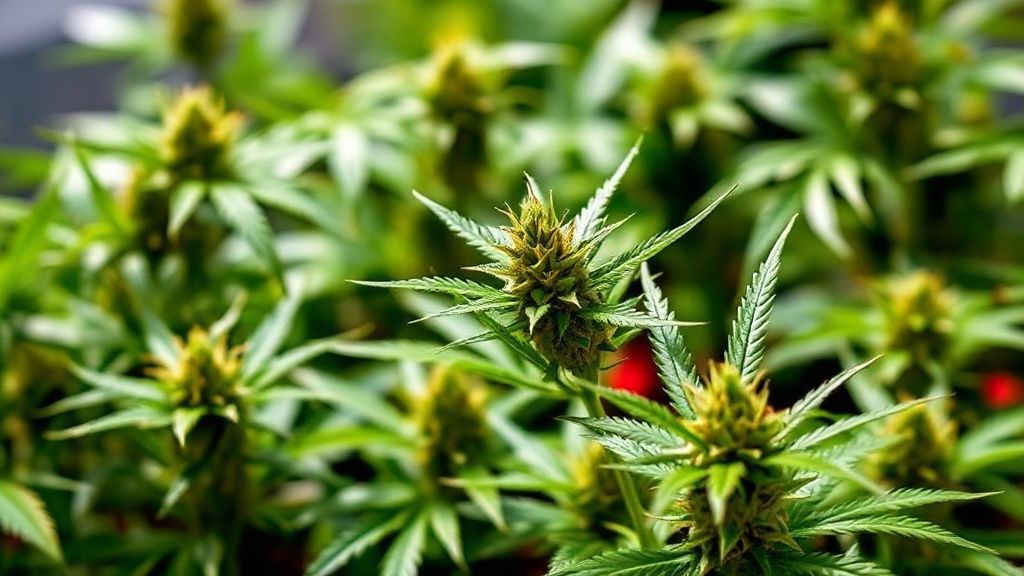
The state of Maryland has recently enacted revisions to its fiscal policy, impacting the cannabis industry. Governor Wes Moore, in conjunction with state legislative leaders, has approved a 33% increase in the cannabis tax rate, escalating it from 9% to 12%. This adjustment forms part of a comprehensive budgetary agreement designed to generate $1 billion in new tax revenue while concurrently addressing a $3.3 billion structural deficit through expenditure reductions exceeding $2.3 billion.
The augmentation of the cannabis tax, scheduled for implementation on July 1, 2025, is projected to contribute an additional $39 million annually to the state’s revenue. However, industry analysts contend that this projection may be inflated, given existing market sales patterns. Maryland’s adult-use cannabis market, inaugurated in July 2023, has stabilized at approximately $900 million in annual dispensary sales. Under current market conditions, the tax elevation would yield an estimated $27 million in supplementary revenue.
For enterprises within the cannabis sector, this tax increase could equate to an average annual tax escalation of $270,000 per dispensary, potentially precipitating higher consumer prices and a migration away from regulated market channels. Notwithstanding these challenges, Governor Moore asserted during a press briefing that the overarching budget agreement remains “unapologetically pro-business,” emphasizing the diversification of Maryland’s economic base and the stimulation of growth within burgeoning industries such as cyber technology, quantum computing, and artificial intelligence.
The fiscal blueprint also incorporates a newly imposed 3% tax on information technology and data services, anticipated to generate nearly half of the $1 billion in new tax revenue. While the cannabis tax increase was not the primary focal point of the announcement, the broader budget agreement underscores the state’s endeavor to harmonize fiscal prudence with economic advancement and social safety net provisions.
Continued observation of the policy’s evolution is imperative to discern its ramifications for both the cannabis industry and Maryland’s economic terrain.